For new pool owners, caring for a swimming pool can feel like learning a new language.
There are new tools, new routines, and new responsibilities. Once you understand how everything works, the process becomes easier and your pool stays clear, comfortable, and safe for everyone who uses it.
This beginner’s guide to pool maintenance walks through the most important parts of pool care so you can keep your pool in good condition throughout the year.
A well-maintained pool has a steady water balance, efficient circulation, and a clean surface. These three pieces work together. When one is overlooked, problems like cloudy pool water, algae growth, or worn equipment begin to appear. A simple pool maintenance routine prevents these issues and keeps your pool inviting.
How Your Pool Equipment Works
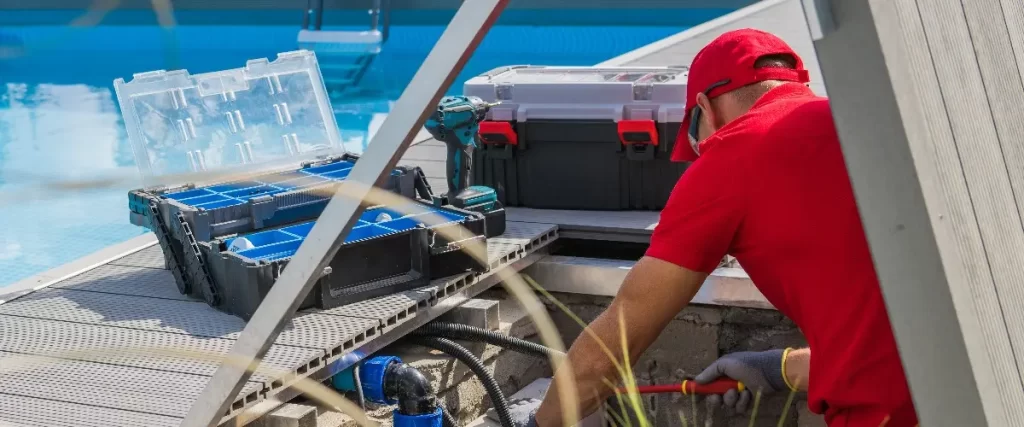
Your pool’s circulatory system includes the pool pump, the filter system, the pool jets, and the plumbing lines that move pool water through the equipment. Once you understand this cycle, caring for the pool feels much more manageable.
The pool pump pulls water through the skimmer basket, the main drain, and sometimes a vacuum line. After that, water flows through the filter and returns into the pool through the jets. Good circulation keeps your pool clean, mixes the pool chemicals, and prevents algae growth on the pool walls and pool floor.
Many homes now use a variable-speed pool pump because it uses less electricity and allows better control. It also helps the filter work more effectively. It’s one of the most practical upgrades for homeowners interested in energy-efficient pool systems that reduce operating costs over time. A pump that runs for at least eight hours a day is a common recommendation, although some pools need longer run times based on size and usage.
Why the Filter Matters
Your pool filter catches the small particles that cloud the swimming pool water. When debris floats through the water, the filter removes it so the pool stays clear. A clean and healthy pool depends on an efficient filter system.
There are three common types of filters. A sand filter uses sand to trap dirt. A cartridge filter uses pleated cartridges. A diatomaceous earth filter uses a fine powder. Each one works well when maintained correctly.
A pool owner should watch the pressure gauge on the filter. Rising pressure usually means the filter is becoming clogged and needs cleaning. Pool filter cleaner helps restore performance when cartridges become coated or when a sand filter needs attention.
Water Balance and Pool Chemistry
Keeping swimming pool water properly balanced is an essential part of pool care. Balanced water protects the pool’s surfaces, keeps the water comfortable for swimmers, and helps the sanitizer work as intended.
Test strips offer a quick way to see what the water needs. Many pool maintenance schedules include testing at least once a week.
Some of the most common levels to monitor include:
- Free chlorine, which keeps the water free of harmful contaminants
- pH, which affects comfort and equipment longevity
- Alkalinity, which helps stabilize pH
- Calcium, which protects surfaces
- A stabilizer, which shields chlorine from sunlight
If these measurements stay in the ideal range, your pool remains stable and clear. Poor water balance can lead to cloudy water, green water, and stains on the pool’s surfaces. A balanced pool also reduces long-term maintenance since surfaces and equipment experience less stress.
Using Pool Chemicals Safely
Pool chemicals keep your pool safe. Chlorine or another sanitizer works every day to remove combined chlorine molecules and maintain a healthy pool. Shocking the pool helps restore free available chlorine when the levels drop or when the water becomes cloudy.
Many new pool owners are unsure how often to shock the pool. A weekly maintenance routine is a common approach. Heavy usage or rainstorms may require additional shock. Using the correct amount protects the swimmers and improves clarity.
Pool chemicals should always be added according to the instructions, and empty containers should be stored safely. A local pool store can help if you need support selecting the right products.
Cleaning Your Pool Each Week
Even when water chemistry is balanced, debris floating on the surface or settling on the pool floor affects clarity. Regular pool cleaning helps the filter work better and reduces the chances of cloudy pool water.
This part of maintenance does not take long. Many pool owners skim the surface every few days to remove leaves or insects. Skimmer baskets catch debris before it enters the pump and should be emptied often.
A few simple steps help keep your pool clean:
- Skim the surface to remove floating debris
- Brush the pool’s walls to remove early algae growth
- Vacuum the pool floor with either a manual vacuum or a robotic pool vacuum
Robotic pool vacuums simplify the process because they scrub pool surfaces and collect debris at the same time. Manual vacuums connect to the pool’s filter system and may require changing the settings to the waste port if the debris load is heavy.
Above-ground pools and in-ground pools both benefit from the same cleaning routine. Consistent brushing and vacuuming prevent buildup and reduce the amount of sanitizer needed.
Supporting Your Pool with Circulation and Covers
Proper circulation helps water stay clean. If the pool pump and filter system run long enough each day, the water moves through the equipment effectively. Many homeowners run their pumps longer during the summer when the pool receives more use and has more exposure to sunlight.
Pool covers also support proper maintenance. Covers protect the water from leaves, insects, and sunlight. This reduces chemical demand and keeps your pool sparkling clean for longer periods. Some pool owners use covers overnight, while others use them between swims or during cooler months.
A cover also helps reduce evaporation. This keeps the water balance more stable, and it lowers the number of adjustments needed during the week.
Common Problems New Pool Owners Face
Cloudy water, algae growth, and reduced flow are the most common concerns for new pool owners. These issues often point to circulation, chemistry, or filter problems.
Low sanitizer levels lead to cloudy pool water and early algae. Improper water balance affects the clarity and may produce stains. A clogged filter reduces flow and causes strain on the pump.
Air leaks in the pump lid or plumbing reduce suction and prevent proper circulation. Dirty skimmer baskets and blocked impellers also limit water movement. Regular inspections of the pump basket and skimmer baskets help maintain a strong flow.
Saltwater pools need the same attention to water balance as traditional swimming pools. Their equipment generates chlorine from salt, but the water still needs regular monitoring.
Once a maintenance routine settles in, these problems become less frequent. A simple checklist helps new pool owners stay organized and keep their pool clear.
Setting Up a Pool Maintenance Schedule
A pool maintenance schedule helps pool owners stay consistent. Many families choose specific tasks for different days of the week to keep the work manageable.
Some choose to skim and check baskets twice a week. Others brush the surfaces once a week and test the chemistry on the weekend. The pump and filter run schedule stays the same every day, so the pool receives proper circulation.
Creating a schedule helps you see what your pool needs. It also keeps your swimming pool water looking clean and clear throughout the whole season.
When to Call for Extra Help
Every pool owner eventually faces unexpected situations. Water that turns green after a storm, persistent cloudy water, or unusual equipment issues may require assistance. A technician can check for air leaks, inspect the pump, confirm circulation, and review the chemistry.
New pool owners often reach out for support when they feel unsure about adjusting chemicals or dealing with stubborn clarity problems. Asking for help saves time and protects the pool surfaces from damage caused by improper adjustments.
Pool Maintenance Can Be Simple with the Right Support
A clean and healthy pool brings joy to any outdoor space. The first few months of pool ownership involve learning the equipment, the chemistry, and the routines. Once everything becomes familiar, weekly maintenance feels comfortable.
Some homeowners prefer to handle everything themselves. Others prefer to have someone maintain the pool for them so they can simply enjoy the water. If you feel more drawn to relaxing in the pool than monitoring pumps and test strips, you can always call us for support with your outdoor space.
If you would rather spend your time enjoying your yard instead of learning every part of pool care, call us at (469) 583-6213 or message us here. Our pool design experts can help you create a space that stays inviting without all the effort.