There’s something magnetic about a fire pit. People naturally drift toward it, drawn by the warmth and the flicker of flames. When you combine that fire feature with a covered patio, you create an outdoor living space that works in almost any weather, extending your time outside far beyond what you’d get with either element alone.
The combination transforms your backyard into something more functional. Rain doesn’t send everyone scrambling indoors. Summer sun doesn’t chase people into the shade. If you’re exploring other layered shade strategies, a covered patio and pergola combo can create a similar sense of flexibility. You’ve built an outdoor room that adapts to whatever the day brings.
Why Fire Pits and Covered Patios Work So Well Together
A covered patio gives you shelter. A fire pit gives you warmth and ambiance. Together, they create an outdoor oasis that feels intentional and complete.
The covered structure provides shade during hot afternoons, keeping your seating area comfortable when the sun is directly overhead. When evening comes, and temperatures drop, the fire pit takes over, radiating heat that makes the space usable well into fall and even through milder winter nights.
This pairing also creates continuity in your outdoor entertaining setup. The roof overhead defines boundaries for your outdoor living area while the fire pit serves as a natural gathering spot within that space. Guests know exactly where to settle in.
Choosing Your Fire Pit Type
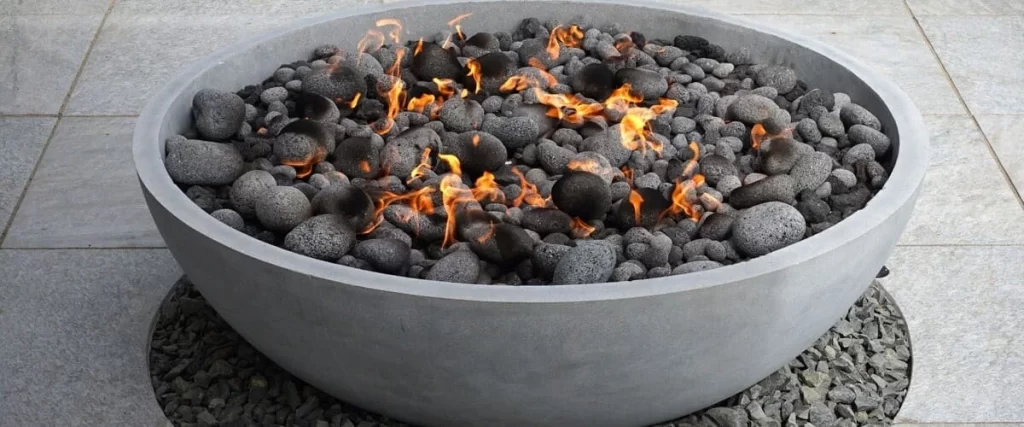
Gas fire pits offer convenience that’s hard to beat. You flip a switch or turn a knob, and flames appear instantly. No wood to split, no ashes to clean. Many homeowners prefer gas lines for this reason, especially when the fire pit sits close to a dining table or outdoor furniture, where smoke could be annoying.
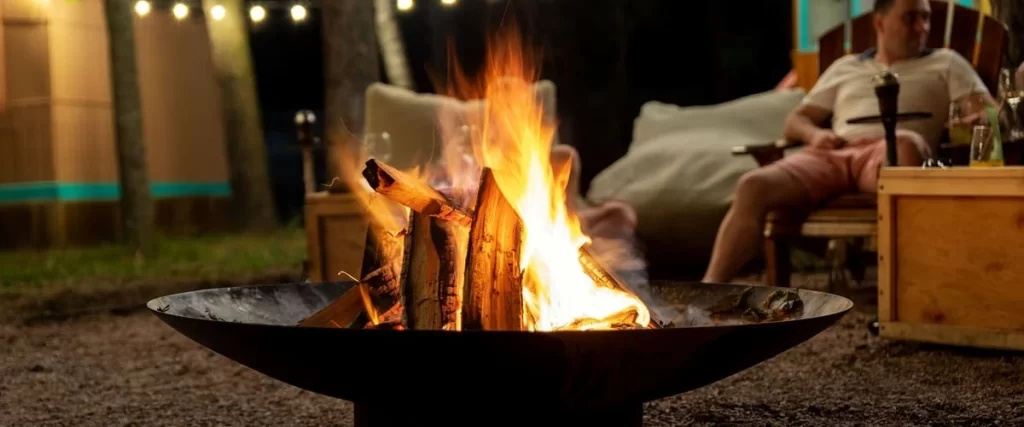
Wood-burning fire pits bring that classic campfire experience. The crackle of burning logs, the scent of smoke, the ritual of tending the fire. Wood-burning pits demand more attention and produce more mess, but they reward you with an authentic atmosphere.
Fire tables and fire bowls work particularly well under covered patios because they typically burn cleaner and produce less smoke than traditional wood-burning options. A fire table doubles as a coffee table between uses, adding functionality to your patio design.
The fuel type you choose affects placement. Gas requires access to natural gas lines or propane tanks. Wood burning needs proper ventilation and distance from your roof structure. Check with your local fire codes before committing to a design, since regulations vary significantly by region and can dictate everything from setback distances to allowable fuel types.
Design Considerations That Actually Matter
Placement determines everything. Your fire pit area needs to work with traffic flow, not against it. People should be able to walk around the fire without squeezing between chairs or bumping into the dining table.
A sunken fire pit area creates a dramatic effect and naturally defines the space. The lowered floor level makes seating feel more intimate while keeping flames slightly below eye level. Built-in seating around the perimeter eliminates the need to arrange and rearrange chairs.
Materials matter for longevity. Under a covered structure, you need non-combustible materials near any open flames. Natural stone works beautifully for this. Flagstone patios and stone fire pits share a rustic look that feels organic. For a modern outdoor aesthetic, interlocking pavers with clean lines create sharp geometry.
Your choice between natural stone and pavers also affects drainage. Proper drainage around fire pit areas prevents water pooling, which can damage materials and create safety issues. The substrate needs to channel water away from both your fire feature and your covered structure.
Scale matters more than you’d think. A massive custom fire pit overwhelms a small patio. A tiny fire bowl gets lost under a large pavilion. The fire pit should feel proportional to your covered space. If your patio comfortably seats eight people, your fire feature should be substantial enough to serve as the focal point without dominating every sightline.
Creating the Right Atmosphere
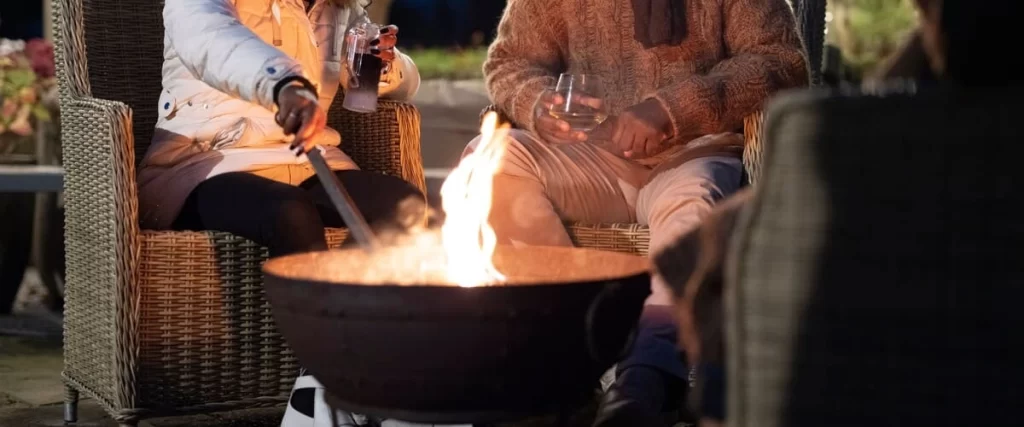
Lighting transforms the space after dark. String lights overhead add gentle illumination that complements firelight without competing with it. The combination creates layers of light at different heights, making the outdoor living area feel dimensional and inviting.
Seating arrangements shape how people use the space. Adirondack chairs around a fire pit encourage relaxation and conversation. Lounge chairs suggest a more casual vibe. Built-in stone benches offer permanent seating that doesn’t need to be moved or stored. Mix seating types to accommodate both intimate gathering spots and larger parties.
A hot tub nearby creates a resort-like feel, though proper planning becomes even more important. You’ll need to manage moisture from the hot tub and ensure adequate ventilation under your covered structure. The fire pit and hot tub shouldn’t compete for attention, so consider positioning them in adjacent zones rather than side by side.
Practical Considerations Before You Build
Fire safety isn’t negotiable. Keep the dry brush cleared from around the fire pit area. Maintain adequate clearance between flames and your roof structure. The National Fire Protection Association (NFPA) publishes standards for outdoor fire pits that many local jurisdictions adopt, so reviewing their guidelines gives you a baseline before contacting local authorities.
Fire risk increases with poor planning. Embers from wood-burning pits can drift upward, potentially landing on your patio roof. Fire balls and other decorative elements in gas fire pits need proper installation to avoid becoming projectiles. A well-designed fire pit includes spark screens for wood-burning options and professionally installed gas connections.
Retaining walls serve multiple purposes when building a fire pit area:
- Defining space: They create visual and physical boundaries
- Managing grade: They handle elevation changes in sloped yards
- Adding seating: Low walls double as perches during larger gatherings
- Improving drainage: They help direct water flow away from your patio
Wind patterns in your backyard affect smoke direction and flame behavior. Observe how air moves through your outdoor space during different times of day before finalizing your fire pit location. A fire pit positioned where prevailing winds blow smoke directly into your covered seating area will frustrate everyone.
Pulling It All Together
Your design style should flow through every element. A rustic look might combine a stone firepit with rough-hewn timber posts supporting your patio cover. A modern look pairs sleek fire tables with metal roof supports and minimalist outdoor furniture. Natural stone works across styles but takes on a different character depending on how it’s cut and laid.
The wow factor comes from cohesion rather than individual elements. When your covered patio, fire feature, and surrounding landscaping feel like parts of a unified vision, the space elevates your entire property. Start planning with the end experience in mind rather than picking individual pieces and hoping they work together.
Stone patios, particularly those using flagstone or interlocking pavers, provide the foundation for this integration. The surface material connects your covered area to your fire pit zone to your yard beyond, creating visual continuity that makes everything feel intentional.
Let Us Handle the Details
Reading about proper drainage, local fire codes, gas lines, and non-combustible materials might have your head spinning. Creating an outdoor living space that combines a covered patio with a fire pit involves careful planning, multiple skills, and coordination with local authorities.
Most homeowners would rather enjoy the finished product than manage the construction process. If you’re thinking about transforming your own backyard but dreading the logistics, we’d love to help. Our team handles everything from initial design through final installation, ensuring your space meets code requirements while exceeding your expectations.
For a beautifully designed space that provides shade, warmth, and year-round usability, check out our paver patio services to see how we create outdoor rooms that become the heart of the home.
Ready to start? Call us at (469) 583-6213 or message us here and we’ll turn your backyard vision into reality.