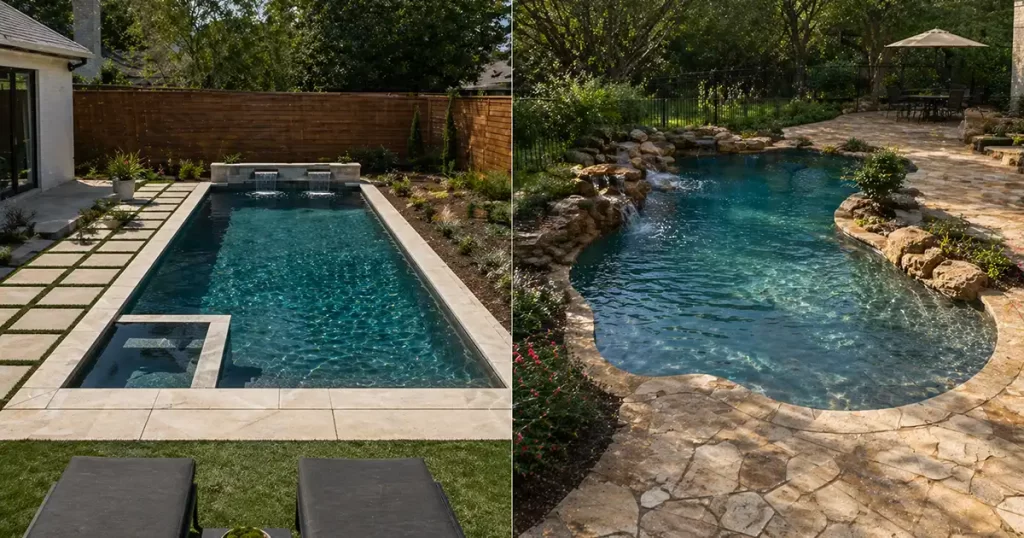
A rectangle is a perfectly functional pool shape. It’s also the same pool your neighbor has. And the neighbor behind you. And the one two streets over.
If you’ve ever stood in your backyard and wondered whether there’s a more interesting option, there is, and it fits better than you’d think.
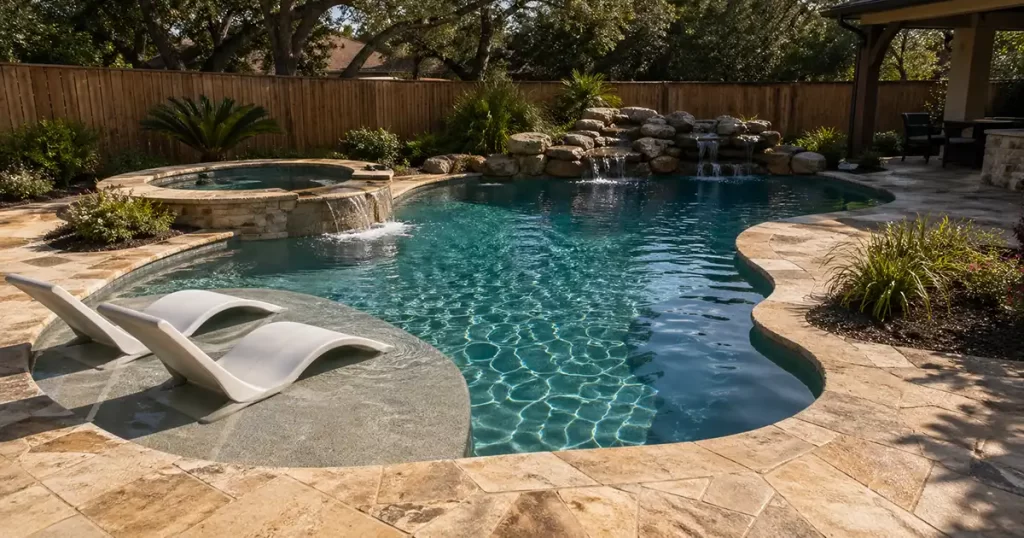
Free form pools trade right angles for curves, organic shapes, and layouts that actually respond to the space they’re in. Here’s what they look like in practice, what makes them work, and what to think through before choosing one.
The Difference Is More Than Aesthetic
Rectangular pools are designed around efficiency. They maximize swim lanes, simplify construction, and work in almost any yard. Freeform pools are designed around atmosphere. The shape curves outward here, tucks in there, maybe widens into a shallow tanning ledge before dropping off toward the deep end. The result doesn’t look like a hole with water in it. It looks like it belongs.
That distinction matters a lot in a backyard with mature trees, an irregular property line, or existing landscaping worth preserving. A rigid geometric shape requires the yard to work around the pool. A free form design works around the yard, and that changes what’s possible.
Design Features Worth Knowing About
Freeform pools aren’t defined by a single look. The curve and shape vary dramatically by design, and so do the features built into them. Some things that typically come up in design conversations:
- Tanning ledges sit at just a few inches of water depth, perfect for lounging chairs and small kids, and they blend naturally into free form layouts where a rectangular ledge would feel forced
- Integrated spas can spill over into the pool along a curved wall, creating the sound of flowing water and a connected, resort-style feel
- Benches and in-pool seating fit into the natural contours of the design without looking like an afterthought
- Rock features and waterfalls follow the organic lines of a freeform shape more convincingly than they do with geometric pools
- Varied depth transitions feel intentional in a free form layout, where the shallow and deep ends flow together rather than changing abruptly
The best free form pools look like they grew there. Getting that effect takes real design work, not just picking a curved shape from a catalog.
What Shapes Are Actually Popular
There’s no single “freeform” shape the way there’s a rectangle or an L-shape. They’re defined by what they’re not, which gives designers a lot of room. That said, a few categories show up most often:
| Style | Characteristics | Best For |
| Lagoon | Wide, irregular curves, natural feel | Landscaped backyards, tropical themes |
| Kidney | Classic two-lobe shape, softer take on a classic | Mid-size yards, transitional styles |
| Figure-eight | Distinct shallow and deep zones connected by a narrow mid-section | Families with kids, spa integration |
| Peanut/asymmetric | More abstract, curves vary in width | Irregular lots, distinctive aesthetics |
| Grotto-style | Cove areas, rock overhangs, dramatic features | Homeowners wanting a high-end resort feel |
Most custom builds combine elements from more than one category. The final shape is usually driven as much by the yard’s dimensions as by any particular style preference.
Freeform vs. Geometric: The Real Tradeoffs
It would be dishonest not to address this. Free form pools typically cost more to build than rectangular pools of similar square footage, because the curves require more labor-intensive formwork and finishing. The difference varies by material and complexity, but it’s real.
What you get in return is a pool that fills in an irregular yard far better than a box would, a design that integrates with landscaping in a way geometric pools rarely do, and a finished backyard that genuinely feels different from the standard suburban setup.
Whether the tradeoff makes sense depends on the yard, the budget, and what matters to the people using it.
How Materials Affect Your Options
Fiberglass freeform pools come in pre-molded shapes, which limits how organic the curves can get but keeps costs and construction timelines more predictable. They’re durable, low-maintenance, and a solid middle ground for homeowners who want a softer shape without going fully custom.
Gunite (concrete) pools are where free form design really opens up. The pool is formed on-site, so the shape can go as elaborate as the budget and lot allow. This is how the most dramatic lagoon-style, grotto, and naturalistic designs get built. The tradeoff is higher cost, longer build time, and more long-term surface maintenance.
Vinyl liner freeform pools occupy the lower end of the cost range. The liner material itself can take on curved shapes, though complex organic forms are harder to execute cleanly. For homeowners with a tighter budget, this can be a reasonable entry point into free form design.
Our custom pool design process starts with understanding your yard and how you plan to use the space before recommending any specific shape or material.
FAQ
Do freeform pools require more maintenance than rectangular ones?
No, the shape doesn’t change the cleaning routine in any meaningful way. Automated cleaners navigate curves just fine, and water chemistry is based on volume, not shape.
Can a free form pool work in a small backyard?
Yes. Compact freeform designs exist specifically for tighter lots, and a smaller pool with interesting curves often reads better in a small yard than a rectangle that dominates the space.
Does the Texas Department of Licensing and Regulation oversee pool construction?
Yes. The TDLR handles contractor licensing for pool and spa construction in Texas. Working with a licensed builder is worth verifying before any project begins.
How long does a custom free form pool take to build?
Gunite pools generally run 10 to 14 weeks from permit approval to water in the pool, with freeform designs sometimes requiring additional time at the forming stage depending on complexity.
How does the surrounding deck affect the overall look?
Significantly. Travertine, flagstone, and natural pavers complement free form shapes better than standard concrete because their irregular cuts follow curves naturally. Our outdoor living spaces work typically incorporates deck and landscaping planning alongside pool design, so everything comes together as a single space.
Your Yard Has More Potential Than a Rectangle Reveals
If you’ve been mentally drawing a box in the back corner of your property, take a step back. A freeform design might fill the same space with something that actually reflects how you want to use it. Call us at (469) 583-6213 or message us here, and let’s look at what your yard can hold.