
Most pool problems don’t show up suddenly. They build over days or weeks while the water looks fine from the back porch. A consistent routine catches those problems early, before they turn into cloudy water, green walls, or a repair bill you weren’t expecting. Here’s what that routine looks like, broken down by how often each task actually needs to happen.
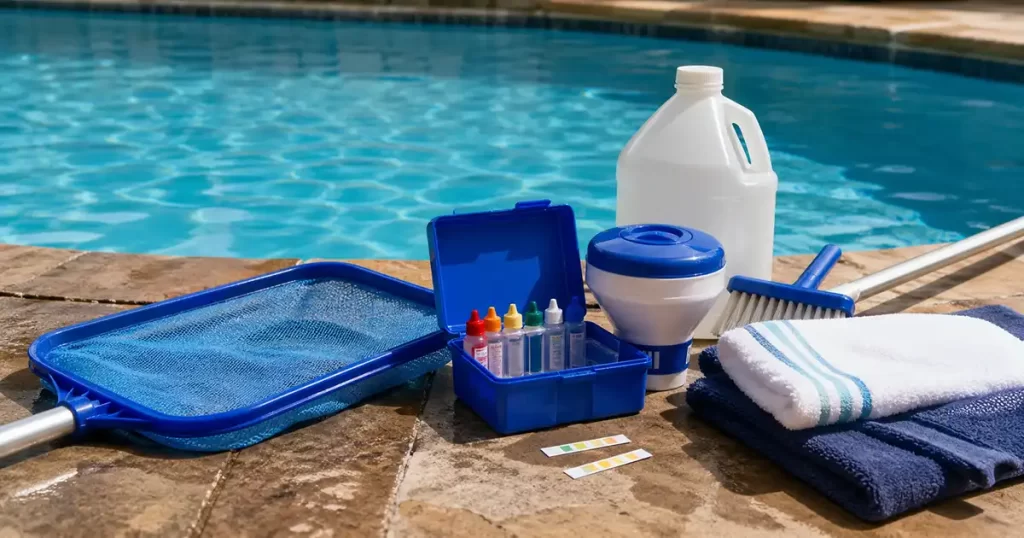
Every Day (Takes About 2 Minutes)
Do a quick visual check. Walk by, look at the water color, check the surface for debris buildup, and make sure the pump is running. That’s it. You’re not testing anything or adjusting anything, you’re just making sure nothing has gone obviously wrong overnight.
It sounds too simple to mention, but a lot of pool issues get noticed late because nobody looked. A pump that stopped running at night is one of the faster ways to end up with water chemistry problems by morning.
Every Week
This is where most of the real work lives.
Test your water chemistry. pH should sit between 7.4 and 7.6. Chlorine between 1 and 3 ppm. Total alkalinity between 80 and 120 ppm. These numbers work together, and when one drifts, the others tend to follow. A basic test strip takes about 30 seconds and tells you everything you need to adjust.
Skim the surface. Leaves, pollen, insects, sunscreen residue, hair products, and whatever else landed in the water since last week. A net skimmer handles this in a few passes. Left alone, organic debris breaks down and consumes chlorine, meaning you need more chemicals to maintain the same water quality.
Brush the walls and floor. Algae doesn’t announce itself before it settles in. Brushing the interior surfaces once a week, especially corners, steps, and behind ladders, disrupts any early growth before it takes hold and becomes a visible problem.
Empty the skimmer basket. A full or clogged skimmer basket reduces water flow through the filter system. Your pump works harder, circulation suffers, and water quality drops. This takes about 60 seconds and makes a real difference.
Vacuum the pool floor. Dirt and debris that sink to the bottom don’t get picked up by the skimmer. A manual vacuum or automatic pool cleaner handles this. If you’re using an automatic cleaner on a regular schedule, you may be able to shift this to every 10 days or so, depending on your yard.
Quick tip worth knowing: A few tennis balls tossed in the skimmer basket will absorb surface oils from sunscreen and hair products before they reach the filter. It works, it’s cheap, and it extends the time between filter cleanings.
Every Month
Check filter pressure. Your filter has a normal operating pressure range. When the gauge reads 8 to 10 psi above that baseline, it’s time to clean or backwash. Running a filter under high pressure makes the entire circulation system less efficient and shortens equipment life.
Shock the pool. Even with consistent weekly chemistry, organic compounds accumulate in pool water over time. A monthly shock treatment, which is simply a higher-than-normal dose of chlorine, oxidizes those compounds and resets the water. Do it in the evening after swimming is done for the day so the treatment has time to circulate before the next use.
Inspect equipment. Look at the pump, filter, and any visible plumbing connections. Check for leaks around fittings, unusual sounds from the pump motor, or anything that looks different from last month. Catching a small equipment issue early is significantly cheaper than catching it after it fails.
Seasonally (Opening, Closing, and Mid-Year)
At the start of each swim season, balance all chemical levels from scratch, inspect the entire pool interior for cracks or surface wear, and check that all equipment is working correctly after any period of reduced use.
Mid-season, especially in Texas, where July and August push pool usage and evaporation both hard, recalibrate your chemical routine. Heat accelerates chlorine burn-off, and a schedule that worked in May may need adjustment by August.
At season’s end or before extended low-use periods, lower the water level appropriately, protect equipment from temperature swings, and clean the filter thoroughly before storing or reducing its workload.
The Numbers Behind Why This Matters
There are roughly 10.7 million residential pools in the United States, and most owners spend somewhere between $3,000 and $6,000 annually on chemicals, electricity, equipment upkeep, and repairs. Consistent maintenance doesn’t eliminate that cost, but it shifts it. Small, predictable expenses beat unpredictable large ones every time, and algae treatments, equipment replacements from neglect, and water clarification services all cost more than prevention.
FAQ
How often should I actually test my water?
Weekly is the minimum for an actively used pool. After heavy rainfall, a large pool party, or any period of extra use, test again. Rain in particular dilutes and disrupts water chemistry faster than most people expect.
What causes cloudy water?
Usually a combination of low chlorine, high pH, or heavy bather load. Shock the pool, check filter pressure, and run the pump for an extended cycle. If it doesn’t clear within 24 to 48 hours, there may be a filtration issue worth looking at.
Does the CDC have guidance on pool water safety?
Yes. The CDC’s Healthy Swimming resources cover proper chemical levels, illness prevention, and water safety standards, and are worth bookmarking if you manage pool chemistry yourself.
When should I call a professional instead of handling maintenance myself?
Equipment issues, persistent chemistry problems that don’t respond to adjustment, and anything involving the pool structure or plumbing are all situations where professional service pays for itself. Our pool maintenance team handles exactly those scenarios for homeowners across the DFW area.
Can I cut back during winter?
You can reduce frequency, but you can’t stop entirely. Water still needs to be balanced, and equipment still needs occasional checks. A neglected pool in winter becomes a project in spring. Our pool building page also covers equipment options that make off-season maintenance easier from the start.
Rather Let Someone Else Handle This?
Honestly, that’s a reasonable call. If the weekly routine is something you’d rather not own, a professional maintenance plan takes it off your plate entirely and keeps your pool in better shape than most DIY schedules do. Call us at (469) 583-6213 or message us here, and we’ll figure out what kind of support makes sense for your pool.