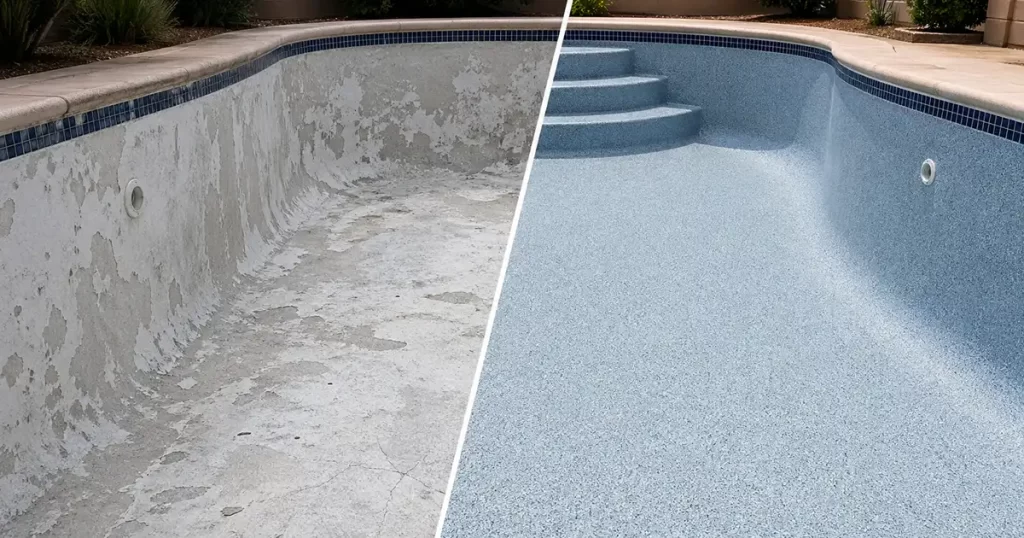
Both fix a worn-out pool surface. But they’re not the same thing, and choosing the wrong one can cost you money sooner than you’d expect.
Replastering means stripping the existing surface down to the concrete shell and applying a fresh coat of traditional white plaster. Pool resurfacing is a broader category that includes replastering but also covers premium alternatives like pebble finishes, quartz aggregate, and glass bead coatings. All replastering is resurfacing. Not all resurfacing is replastering.
The difference matters because the material you choose affects how the finished surface looks, how long it lasts, and how much you’ll spend maintaining it over the next decade or two.
Side-by-Side Comparison
| Surface Type | Typical Lifespan | Cost per Sq Ft | Texture | Best For |
| Traditional white plaster | 7 – 10 years | $3 – $5 | Smooth | Budget-conscious updates |
| Quartz aggregate | 12 – 15 years | $5 – $8 | Smooth to semi-textured | Balance of cost and durability |
| Pebble finish | 15 – 20+ years | $10 – $18 | Textured | Long-term investment, stain resistance |
| Glass bead coating | 12 – 20 years | $10 – $20 | Smooth, luminous | Aesthetic upgrades, premium appeal |
What Traditional Plaster Actually Is
Standard pool plaster is a mixture of white cement and marble dust. It’s been the go-to pool surface material for decades, and it works. White plaster gives pools that classic bright blue look, it’s smooth underfoot, and it’s one of the more affordable options available.
The tradeoff is durability. Traditional white plaster typically lasts 7 to 10 years before it starts showing its age. Surface staining, rough texture, and small cracks tend to develop as the plaster wears. Acid washing can extend the surface’s life and freshen the appearance, but at some point, the old plaster needs to come off entirely and a new layer needs to go down.
What Modern Resurfacing Materials Offer
This is where things get interesting for pool owners who want more than just a fresh version of what they had before.
Quartz aggregate blends white cement with crushed quartz crystals for a harder, more stain-resistant surface. It holds up better than traditional plaster, lasts 12 to 15 years on average, and comes in a range of colors and textures.
Pebble finishes are the most durable option available. Tiny natural pebbles are embedded throughout the surface, creating a texture that resists staining, handles chemical fluctuations better than smoother materials, and can last 15 to 20 years or more. The finish tends to feel slightly coarser underfoot than plaster, which some homeowners prefer and others don’t.
Glass bead coatings add a shimmering, reflective quality to the water that looks stunning, especially at night with lighting behind it. They’re among the more premium options and are often used to give an existing pool a high-end, resort-style finish.
How to Tell Your Pool Needs Resurfacing
Surfaces don’t fail all at once. The signs tend to build gradually, which is why many pool owners are overdue by the time they take action.
- Rough texture that scratches feet or swimsuits is one of the earliest signals
- Persistent staining that doesn’t clear up with acid washing or chemical treatment
- Visible cracks or chipping on the floor or walls, even minor ones, that allow water to seep toward the shell
- Chalky or faded appearance where the surface has lost density and color uniformity
- Plaster peeling or flaking in chunks or patches
Any one of these can be addressed with targeted repair. Multiple signs appearing together point toward a full resurfacing project rather than spot fixes.
The Cost Question
Traditional replastering is the most affordable starting point, generally ranging from $3 to $5 per square foot for materials and labor. A standard 12×24 pool at that rate runs somewhere between $3,500 and $7,000 depending on condition and prep work needed.
Pebble and glass bead options run higher, sometimes significantly so, but the longer lifespan changes the math. If traditional plaster needs replacing every 8 years and a pebble finish lasts 20, the pebble finish often comes out ahead over the life of the pool even though the upfront cost is greater.
Homeowners are spending more thoughtfully on upgrades with long-term durability in mind, not just the lowest upfront cost. Pool surfaces are a clear example of where that thinking applies.
A Few Things That Affect Your Final Cost
Prep work is a big one. Removing old plaster down to the concrete shell takes time and labor, and if there’s any structural repair needed on the shell before a new surface goes on, that adds to the total. Pools with significant cracking in the underlying concrete need to be addressed first before any surface material goes down.
Pool shape and size matter too. Freeform designs with curves, steps, benches, and tanning ledges require more detailed application work than a standard rectangular pool. Tile work on the waterline or step edges is typically a separate line item.
If you’re already investing in a full resurfacing project, it’s worth considering deck work at the same time since the area around the pool gets disrupted during resurfacing anyway. Our pool deck and outdoor living spaces work is often paired with surface renovation for that reason.
FAQ
Does the surface material affect water chemistry?
Yes, in meaningful ways. Traditional plaster is more porous and tends to affect pH more actively than quartz or pebble finishes. A harder, denser surface, like pebble, generally means more stable water chemistry and fewer chemical corrections over time.
What’s the process once a resurfacing project is confirmed?
The pool gets drained, the existing surface gets prepped or fully removed, any underlying repairs are made to the shell, and then the new surface is applied. After curing, the pool gets refilled, the water chemistry gets balanced, and a startup chemical treatment runs for the first week or two to help the surface cure properly.
Can I upgrade from white plaster to a pebble finish in the same project?
Yes. A full replastering project is an ideal time to upgrade surface materials since the pool is already drained and prepped. Most homeowners who are going through the effort choose a more durable material rather than simply replacing like-for-like.
How much does pool size affect the total cost?
Directly. Both material and labor scale with square footage. Smaller plunge pools are cheaper to resurface than large freeform pools, but the per-square-foot rate for labor is often similar. Total cost varies widely based on pool size, surface type, condition, and any additional features being updated at the same time. Our pool remodeling services include an honest assessment of what your specific pool needs before any work begins.
Let’s Figure Out What Your Pool Actually Needs
Surface condition is something we can assess on-site and give you a straight read on, whether that’s a spot repair, a simple replaster, or a full upgrade to something that’ll hold up for the next 20 years. Call us at (469) 583-6213 or message us here, and let’s take a look at what you’re working with.