
Most homeowners don’t think about pool permits until a contractor brings them up, at which point the conversation shifts from gorgeous backyard renderings to “wait, do we really need all this paperwork?” The honest answer is yes. A backyard pool is a permanent structural change to your property with electrical, gas, water, and safety implications, and your local government wants to make sure all of that is built correctly before anyone swims in it.
The good news is that the process is less mysterious than people fear. It usually comes down to a building permit, an electrical permit, sometimes a plumbing or gas permit, a few inspections along the way, and a final sign-off before the pool can be filled. Most of the filing work falls on your contractor. Most of the surprises come from skipping steps.
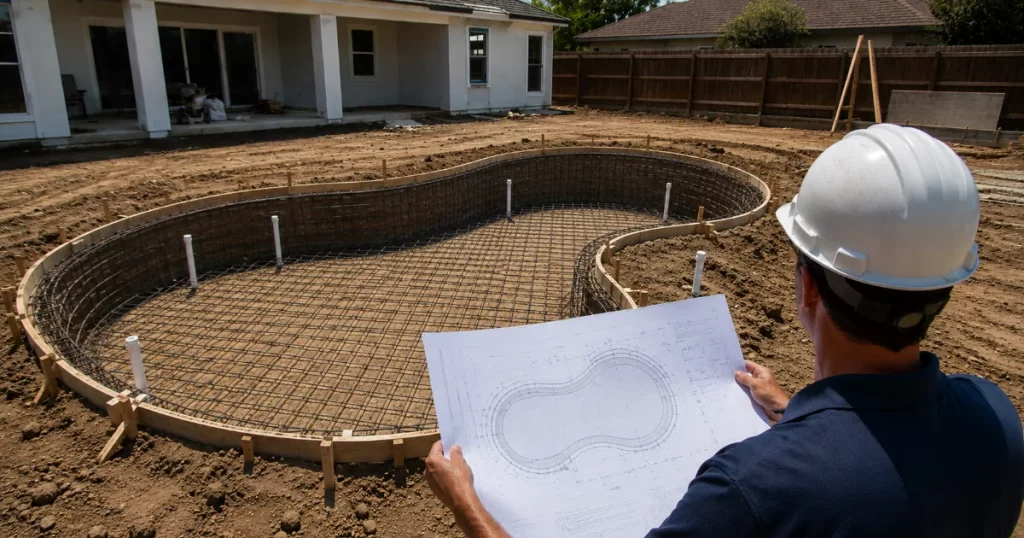
Why Pool Permits Exist (and Why Skipping Them Backfires)
Permits exist for three reasons: structural safety, electrical safety, and drowning prevention. A pool is heavy, electrical wiring runs nearby, gas lines often feed the heater, and small children sometimes wander into pool areas unsupervised. The local government’s job is to make sure construction meets code in every one of those categories.
Skipping permits feels like a shortcut until it isn’t. Unpermitted pools become problems at resale, can void homeowners’ insurance coverage when something goes wrong, and can trigger fines plus forced re-inspection (sometimes including partial demolition) if the city catches them later. Doing it right the first time is always cheaper than doing it twice.
The Permits You Probably Need
The exact mix depends on your municipality, but most residential pool projects in the U.S. require some combination of the following.
| Permit Type | What It Covers |
| Residential building permit | The pool structure itself, the deck, retaining walls, and any related hardscape |
| Electrical permit | Pump, lighting, bonding, GFCI protection, and any new circuits |
| Plumbing permit | Water lines to the pool, drains, and fill plumbing |
| Gas permit | Required when the pool includes a gas heater |
| Fence or barrier permit | The protective fencing around the pool, which most cities mandate |
| Right-of-way or grading permit | Sometimes triggered by excavation near sidewalks or utility easements |
Some cities bundle these into a single pool permit. Others issue them separately. The contractor handles the filings on your behalf in most cases, though you, as the homeowner, remain the named applicant on the property record.
If you are still in the planning stages, our breakdown on the most important factors to settle before any pool construction starts covers the decisions worth making before paperwork even comes up.
What Goes Into the Application
Permit applications look intimidating until you realize they are mostly checklists. The municipality wants paper proof that your project meets code before construction starts. Typical submissions include:
- A site plan showing the pool’s exact location, dimensions, and distance from property lines, the house, septic systems, and any utility easements
- Construction drawings detailing the pool shell, depth, structural specs, and equipment locations
- Electrical and plumbing schematics tying the pool into the home’s systems
- A barrier plan showing fencing, gates, locks, and alarms required for code compliance
- Engineer-stamped drawings for larger or more structurally complex pools
- Proof of contractor licensing and liability insurance
The barrier plan is where homeowners are most often surprised. The U.S. Consumer Product Safety Commission’s pool safety barrier guidelines for home pools set the standards most local codes follow, including minimum fence heights of 48 inches, maximum gap widths, self-closing and self-latching gates, and door alarms on house entries that open onto the pool area.
The Inspections Along the Way
A pool build is inspected at three or four points during construction, not just at the end. Each one has to pass before the next phase of work can start.
The pre-pour or pre-gunite inspection looks at excavation, steel reinforcement, and bonding before any concrete goes in. The plumbing rough-in is checked once the pipes are run but before they get buried. The electrical rough-in covers bonding, conduit, and any new circuits. The final inspection happens after construction, the deck pour, and the barrier fencing are all complete, but before the pool is filled and used.
Once the final inspection passes, the city issues a certificate of completion. That document is what matters at resale and what your insurance carrier wants on file.
Where Homeowners Get Tripped Up
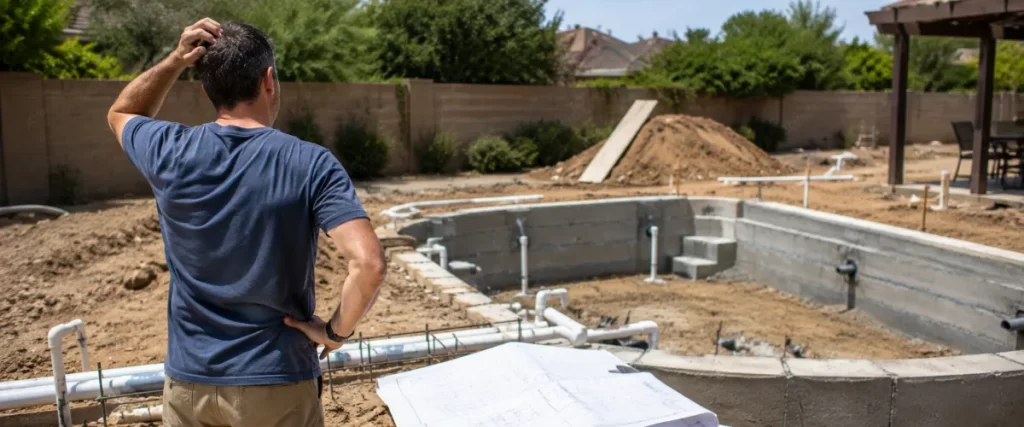
A few patterns show up over and over on permit issues.
- Hiring a contractor who promises to pull permits “later.” That phrase usually means “never,” and after-the-fact permits almost always trigger fines and re-inspection
- Forgetting the HOA layer. City permits and HOA approval are separate processes, and HOAs in some neighborhoods have stricter rules than the city
- Underestimating the barrier requirements. Fence height, gate hardware, and door alarms catch homeowners off guard during the final inspection
- Ignoring setback distances from property lines or septic systems
- Building through a utility easement without checking with the gas, water, and electric companies first
For a wider look at how permits fit into the overall project schedule, our piece on what each stage of an outdoor build looks like covers the bigger picture.
Quick Answers to Common Questions
How long do permits take? Anywhere from 2 to 12 weeks, depending on the city and your HOA. Plan for 8 weeks to be safe.
Can I pull the permits myself? In most cases, yes, but it shifts code-compliance liability onto you. Most contractors prefer to file under their own license.
What does a pool permit cost? Fees vary by city and pool size, typically $300 to $1,500 for residential builds. That figure excludes HOA fees.
What happens if I skip the permit? Best case, the city flags it during a future home sale, and you backfill paperwork and inspections. Worst case, fines, forced re-inspection, and partial demolition to expose work for review.
Or, You Could Just Have Us Handle the Whole Thing
Permit forms, site plans, barrier specs, inspection schedules, and HOA submissions are not how most homeowners want to spend their weekends. The fun part of a pool is the swimming, not the paperwork that gets you there.
That part is on us. We handle every permit, every HOA submission, every inspection, and every code-compliance detail as part of the project. You stay focused on the design and the finishes.
If a fully permitted, fully inspected pool sounds better than chasing forms yourself, call us at (469) 583-6213 or message us here to talk through your project. You can also see the kind of work we do on our pool building page.