The pool itself draws most of the design attention. The decking around it usually comes second. Then a homeowner steps onto the new surface barefoot in late July and realizes the surround was the bigger decision.
A pool surround takes direct sun for hours, splashing water and pool chemicals constantly, freeze-thaw cycles in cold winters, and serves as the main lounging surface for half the year.
Picking the right material is partly a budget call, partly a climate call, and largely a comfort call. The trade-offs are knowable, and most homeowners get it close to right when they think them through ahead of time.
The One Thing Most Homeowners Underrate
Surface temperature. That’s the variable people wish they had taken more seriously after the first hot weekend.
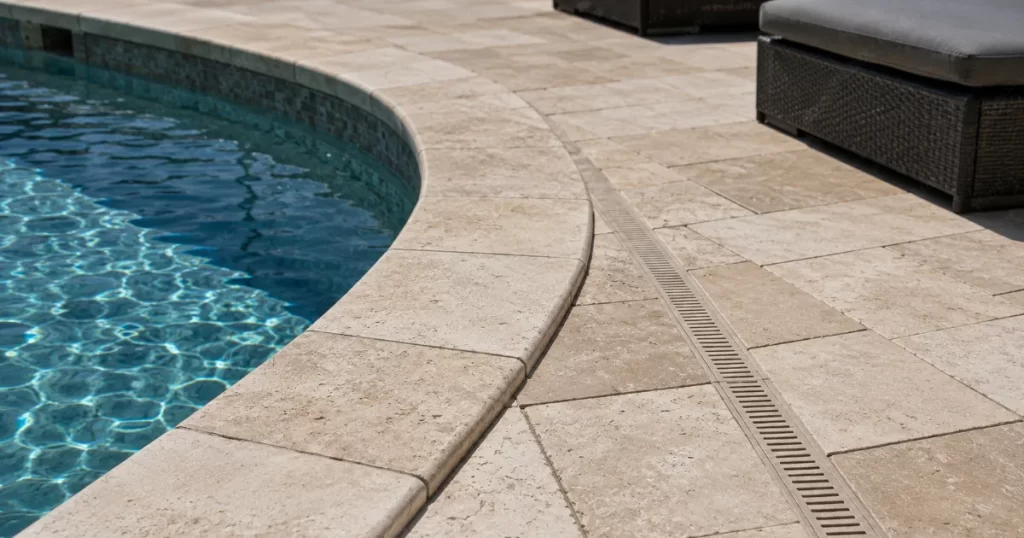
A dark concrete deck in full Texas sun can hit 135°F. Light-tone poured concrete sits closer to 115 to 120°F. Travertine, which is porous and reflects heat, often stays around 105°F. The 30-degree gap separates a deck you can walk barefoot all afternoon from one where you sprint to the pool steps because the surface burns.
That difference shows up daily in how often the family actually uses the space.
Cost and Heat at a Glance
The rough comparison most homeowners want to see in one place.
| Material | Installed Cost (per sq ft) | Surface Temp in Sun | Slip Resistance | Lifespan |
|---|---|---|---|---|
| Poured concrete | $6 to $12 | 115 to 135°F | Moderate (textured better) | 25 to 30 years |
| Concrete pavers | $12 to $20 | 118 to 145°F | Good (textured) | 25 to 50 years |
| Travertine | $15 to $27 | ~105°F | Very good | 50+ years |
| Porcelain pavers | $28 to $45 | ~108°F (light tones) | Excellent | 50+ years |
| Natural flagstone | $20 to $35 | ~110°F | Excellent | 50+ years |
Five Pool Surround Options Worth Knowing
1. Poured concrete
The default choice is the most affordable. Smooth-troweled, broom-finished, or stamped to mimic stone. A light-tinted poured deck handles pool chemistry well, lasts decades, and runs roughly $6 to $12 per square foot installed. The downsides: dark tones get hot, and large slabs are prone to cracking over time, which becomes a structural repair rather than a cosmetic patch.
2. Concrete pavers
Interlocking concrete blocks in dozens of shapes, sizes, and colors. They flex slightly with ground movement instead of cracking, which makes them a smart pick on expansive clay or settling soil. A failed paver lifts out and gets replaced individually. Cost runs $12 to $20 per square foot installed. Dark tones run hot, and resealing every couple of years keeps them looking sharp.
3. Travertine
Natural limestone is quarried in Turkey, Mexico, and Italy. The contractor’s go-to recommendation for barefoot-comfortable decks in hot climates because it stays meaningfully cooler under sun than concrete options. Natural slip resistance from the textured surface, and it ages beautifully. Trade-offs: higher upfront cost ($15 to $27 per square foot installed) and resealing every two to three years to protect against pool chemistry.
4. Porcelain pavers
The newer premium option, manufactured from clay fired at extremely high temperatures. Dense, almost non-porous, and nearly maintenance-free. Handles saltwater pools especially well, thanks to very low water absorption, and light tones stay cool. Cost is the highest of the group at $28 to $45 per square foot installed. For modern pool designs with clean lines, it’s hard to beat aesthetically.
5. Natural flagstone
Irregularly shaped slate, sandstone, or quartzite laid in an organic pattern. Gives a pool deck a rustic, garden-like feel that pairs well with naturalistic landscaping and freeform pools. Excellent slip resistance from the natural texture. The variability is the upside aesthetically and a downside structurally, since uneven thicknesses can cause lippage when installed poorly. Generally $20 to $35 per square foot installed.
If you are still settling the broader pool plan before getting into surrounding materials, our breakdown on the most important factors to consider before building a pool covers the upstream decisions.
Other Factors Worth Weighing
Temperature and price get top billing. A few others sneak up on homeowners later:
- Sealing schedule. Travertine and most natural stones need resealing every 2 to 3 years to protect against pool chemistry. Porcelain doesn’t, which is one of its quiet advantages
- Drainage. The deck has to slope away from the pool so water sheets off, with appropriate joints or channels to keep water from pooling near the house
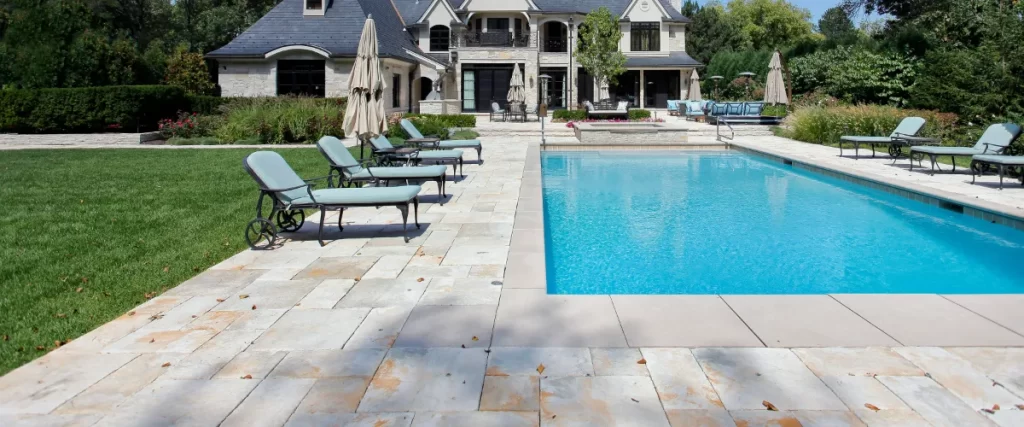
- Coping match. The coping (the lip of the pool) is usually a separate piece, but colors and materials should coordinate so the surround and pool edge read as one design
- Fence and barrier integration, since the four-sided pool fence that the CDC’s drowning prevention guidelines recommend has to land somewhere on or near the surround
- Shade structures. A pergola or covered patio over part of the deck drops surface temperatures fast. Our notes on adding a pergola for usable shade cover how to size one for a pool area
Quick Q&A
Can I mix materials? Yes, and it often looks great. A travertine border around the pool with concrete pavers across the larger lounge area is a popular cost-effective combination.
What about resurfacing an existing deck? Pavers can sometimes go over existing concrete, and overlays like Kool Deck or acrylic spray textures can refresh a worn surface. Both run roughly 40 to 60 percent less than full replacement.
Does the surround affect pool maintenance? A little. Lighter-colored decks reflect more sun onto the water, which can warm the pool slightly. Trees near a deck drop debris into the water. The bigger maintenance impact is sealing the deck itself.
How long does deck installation take? Most pool surrounds run 1 to 2 weeks of work, scheduled at the end of the pool build after shell, plumbing, and electrical are complete.
Save Yourself the Homework
Comparing surface temperatures, slip ratings, sealing schedules, joint patterns, and twelve different paver finishes is a lot for someone who really just wants to enjoy their backyard. Most homeowners would rather see two or three samples on site and pick the one that feels right.
That part is on us. We walk the yard with you, narrow the field by what fits your climate, your budget, and your pool design, and handle the install as part of the larger build.
If a pool with the right surround sounds better than weeks of researching pavers, call us at (469) 583-6213 or message us here to talk through your project. You can also see the kind of work we do on our pool building page.