Most homeowners ask this question after browsing a Pinterest board full of pizza ovens and getting a tape measure out behind the patio. The answer is usually yes, sometimes no, and almost always more nuanced than people expect.
A useful way to frame it: a permanent outdoor kitchen with gas hookups, electrical wiring, plumbing, or new structural work almost always needs at least one permit. A freestanding grill station running on a portable propane tank with an existing outdoor outlet and no plumbing usually doesn’t. The trickier projects fall somewhere between those two scenarios, and the specifics vary by city, state, and HOA.
When the Answer Is Almost Certainly Yes
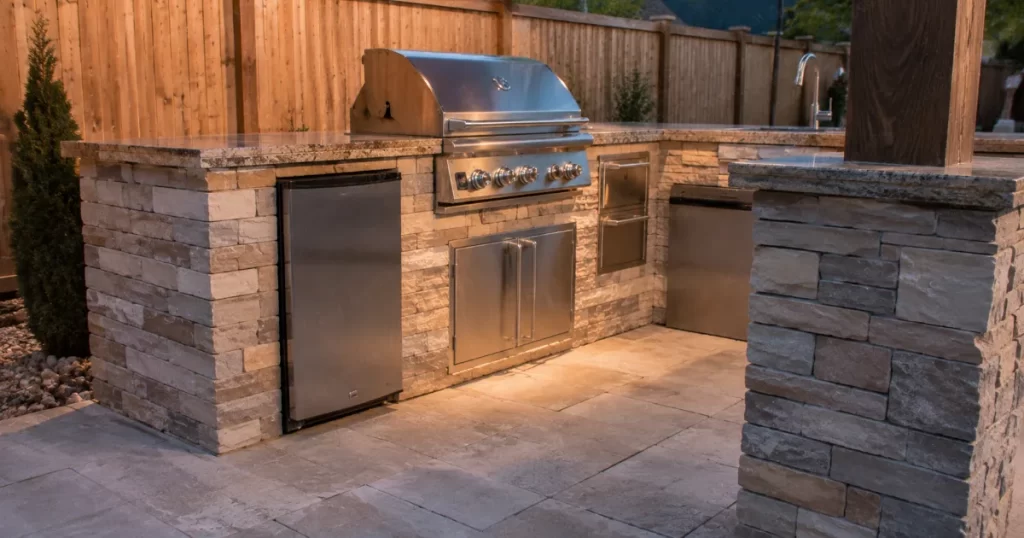
Some features pull permits in nearly every jurisdiction. If your outdoor kitchen plans include any of these, paperwork comes before pavers.
- A natural gas line or hard-line propane connection. Permanent gas connections are a fire and explosion risk if installed incorrectly, so virtually every city requires a gas permit, a licensed installer, and an inspection
- New electrical circuits or hardwired appliances. Adding a dedicated circuit for a refrigerator, ice maker, or hardwired lighting requires an electrical permit in most areas
- Plumbing connections. A sink, an ice maker tied into a water line, or any drainage work pulls a plumbing permit
- A new permanent structure. Pavilions, gazebos, or solid-roofed pergolas attached to or near the home trigger building permits, sometimes a structural engineering review
- Concrete footings or foundation work that anchors the kitchen to the ground
If your kitchen plan touches one or more of those, count on the project running through the local building department, and possibly the gas utility, before any concrete gets poured.
When the Answer Is Probably No
A simpler grill station setup often slides under the permit radar entirely. The general rule: if nothing in your kitchen becomes a permanent part of the property, and nothing taps into the home’s gas, water, or electrical systems, permits usually don’t apply.
Examples that typically don’t require permits:
- A freestanding grill or kitchen island sitting on an existing patio
- Propane appliances using portable tanks instead of a hard-line connection
- Plug-in appliances using existing outdoor GFCI outlets
- Modular kitchen units that can be moved
- Decorative shade structures like fabric pergolas or freestanding umbrellas
Local rules vary, so it’s worth a quick call to your building department before assuming. Some cities classify any outdoor cooking setup over a certain size as a permanent structure, regardless of whether it’s bolted down.
The Permits Outdoor Kitchens Usually Need
When the answer is yes, here is what tends to come into play.
| Permit Type | When It’s Required |
| Building permit | Permanent kitchen structure, walls, footings, or roofed enclosure |
| Electrical permit | Any new circuit, hardwired appliance, or new outdoor outlet |
| Gas permit | Any natural gas line or permanent propane connection |
| Plumbing permit | Sinks, ice makers tied to water lines, drains |
| Mechanical permit | Sometimes triggered by ventilation hoods over covered kitchens |
Multiple permits often apply to a single project. The contractor handles the filings in most cases, but you, as the homeowner, remain the named applicant.
If you are still working through the structure question (covered or open, pergola or solid roof), our breakdown on what changes when a roof goes over the outdoor kitchen walks through the trade-offs. The decision affects which permits your project will pull.
Why Gas Permits Are the One Most People Miss
Gas line work is where homeowners most often run into trouble. Improperly installed gas lines are a leading source of residential carbon monoxide exposure, which is why the U.S. Consumer Product Safety Commission’s carbon monoxide safety guidelines treat fuel-burning appliance installation and venting as a serious safety category. A licensed gas fitter, a gas permit, and a follow-up inspection are the standard process for any hard-line outdoor kitchen connection.
Skipping the gas permit is also where penalties scale quickly. A gas leak discovered later can trigger forced re-inspection, system replacement, and sometimes fines on top of the repair.
The HOA Layer
City permits and HOA approval are two separate processes that many homeowners conflate. An HOA can require approval for the kitchen’s location, the materials, the height of any shade structure, the appliance brands visible from neighboring lots, and the finish on any cabinets or countertops.
HOA review typically takes 2 to 6 weeks on top of the city permit timeline. Submitting both at once is cleanest, since the HOA usually wants to review the same plans the city does. If you are weighing covered options for the kitchen, our notes on pergolas versus solid-roofed patios cover the trade-offs in more depth.
Quick Q&A
How long does the permit process take? Anywhere from 2 to 8 weeks depending on the city and the scope. Plan for 6 weeks when multiple permits are involved.
What does an outdoor kitchen permit cost? Permit fees vary widely. A basic building permit usually runs $200 to $600. Electrical, gas, and plumbing add $100 to $300 each. Expect $500 to $1,500 total on a full build.
Can I pull the permits myself? In most cases, yes. Doing so shifts code-compliance liability onto you, which most homeowners would rather avoid. Contractors typically file under their own license.
What if I skip the permits? Best case, the city flags it during a future home sale and you pay back-fees plus re-inspection costs. Worst case, fines, forced demolition of unpermitted work, and an insurance carrier that won’t cover a fire involving an unpermitted gas line.
Save Yourself the Homework
Permits, gas lines, electrical inspections, HOA submissions, and city paperwork are not how most homeowners want to spend their evenings. The fun part of an outdoor kitchen is the cooking, the friends, and the first proper Saturday burger of the season.
That part is on us. We file the permits, schedule the inspections, coordinate with the gas and electric companies, and handle every code-compliance detail as part of the build. You stay focused on the design and the appliance picks.
If you are planning a permanent setup with gas, electrical, plumbing, or a covered structure, take a look at our outdoor kitchen design and build services to see how we bring the layout, appliances, materials, and construction together. Then call us at (469) 583-6213 or message us here to talk through what your backyard kitchen could become.