Most homeowners don’t pay cash for a new swimming pool, and there’s nothing wrong with that. Installing an in-ground pool costs an average of $65,000 in 2026, with most projects landing somewhere between $44,000 and $87,000, depending on size, materials, and what you add around it. Pool financing lets you spread that cost into manageable monthly payments instead of draining your savings all at once.
The options are worth understanding before you sign anything.
What a Pool Actually Costs in 2026
Before picking a loan type, it helps to know what you’re working with.
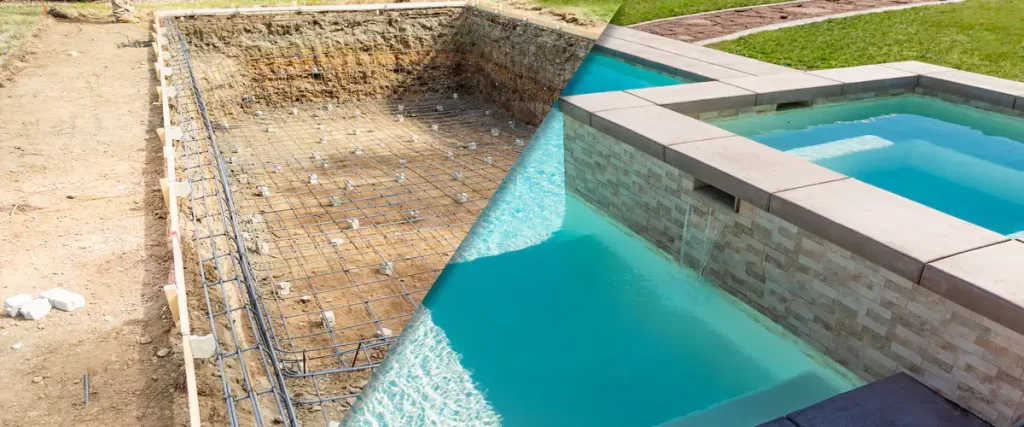
Vinyl liner pools sit on the lower end, starting around $40,000. Concrete pools range from $65,000 to $120,000. Fiberglass falls somewhere in between. Those are baseline numbers. Add decking, lighting, heating, or a sp,a and the total cost climbs fast.
On top of installation, expect $80 to $150 per month in ongoing maintenance, chemicals, and utilities. Vinyl liner replacement every 10 years runs $3,000 to $7,500. Worth factoring in before you finalize how much you actually need to borrow.
Your Pool Financing Options, Side by Side
| Loan Type | Secured? | Typical Rates | Loan Amounts | Best For |
| Personal loan | No | 10%–30% APR | Up to $100,000 | Fast funding, no equity needed |
| Home equity loan | Yes | Starting ~8% | Up to 85% of home equity | Lower rates, fixed payments |
| HELOC | Yes | Variable | Up to 85% of home equity | Flexible draw, multiple projects |
| Contractor/dealer financing | Varies | Often higher | Varies | Convenience, read terms carefully |
| Cash-out refinance | Yes | Mortgage rates | Significant | Large projects, existing mortgage |
Personal Loans: Fast, Simple, No Collateral
A personal loan is an unsecured loan, meaning your house isn’t on the line. You apply, get approved, receive a lump sum, and repay it in fixed monthly payments over a set term.
Borrowers with excellent credit, a FICO score over 740, may qualify for fixed interest rates as low as 5%, with low or no fees. The tradeoff is that fair-credit borrowers can end up paying significantly more, sometimes upward of 29% APR, which meaningfully inflates the total cost of the pool over time.
Banks, credit unions, and online lenders all offer personal pool loans, and rates vary widely between them. Comparing a few before committing takes an hour and can save thousands.
Home Equity Loans: Lower Rates, More at Stake
A home equity loan uses your home as collateral. Because the lender has that security, you generally get lower interest rates in return, typically starting around 8%, with terms ranging from 5 to 30 years.
You can usually borrow up to 85% of your home’s value minus what you still owe on your existing mortgage. The money arrives in one lump sum with a fixed interest rate and predictable monthly payments throughout.
The catch is real: your home is collateral. Stopping payments puts it at risk of foreclosure in a way that a personal loan simply doesn’t. Most home equity loans also carry closing costs of 2% to 5% of the borrowed amount, worth factoring into the true upfront cost.
HELOCs: Flexible but Variable
A HELOC gives you access to a credit limit you can draw from as needed during a draw period, typically ten years, rather than handing you everything upfront.
It makes particular sense if you’re planning multiple projects over several years, like building a pool now and making other outdoor improvements later, since you only borrow what you need when you need it.
The significant downside is the variable interest rate. Monthly payments can shift as market rates move. For homeowners who prefer predictability in their budget, that’s worth weighing carefully against the flexibility.
Contractor or Pool Dealer Financing
Many pool dealers offer financing directly, which makes the whole process feel seamless. You’re choosing your pool and arranging payment in the same conversation.
It’s convenient, but it’s rarely the best deal. Promotional rates that look attractive upfront often carry deferred interest that becomes due in full if the balance isn’t cleared within a specific window. Getting a quote from your dealer and then comparing it against a personal loan or home equity option takes an afternoon and can save you real money.
What Your Credit Score Actually Does to Your Rate
Most lenders require a minimum credit score of 660 to qualify for pool financing, with interest rates ranging from 6% to 36% APR depending on your profile and lender.
Before you apply anywhere, it’s worth pulling your credit report through Annual Credit Report, the federally mandated free resource for checking your score and disputing any errors. Cleaning up inaccuracies before submitting a loan application can meaningfully improve the rate you’re offered.
The Hidden Costs Worth Knowing Before You Borrow
Pool financing covers the construction. Pool ownership carries additional costs that catch many homeowners off guard:
- Monthly maintenance runs $80 to $150 per month on average, more with professional service
- Vinyl liner replacement every 10 years costs $3,000 to $7,500
- Pool heating with a gas heater runs $1,500 to $6,000 installed
- Permits vary from $100 to $1,800 depending on your municipality
- Safety fencing is required by many Texas municipalities, running $10 to $45 per linear foot depending on material
These aren’t reasons not to build. They’re numbers worth knowing before you finalize your loan amount so you’re not stretched thin after construction wraps up.
Does a Pool Actually Add Property Value?
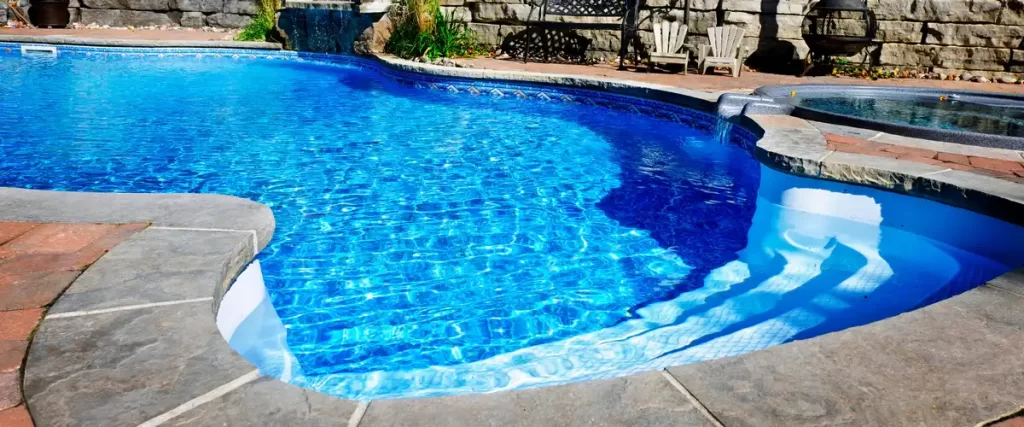
A well-built in-ground pool can increase home value by up to 7%, though the actual impact depends on pool type, climate, and the local real estate market. In Texas, where outdoor living is a genuine year-round lifestyle, a pool adds real value both in daily enjoyment and at resale.
FAQ
Do I need excellent credit to finance a pool? Not necessarily. Most lenders accept scores of 660 and above, but the better your credit history, the lower your rate and the more pool financing options you’ll have access to.
Is it better to use home equity or a personal loan? Depends on your financial situation. Home equity options offer lower interest rates but use your home as collateral. Personal loans are faster and carry no foreclosure risk, but rates are higher without excellent credit.
Can I pre-qualify without affecting my credit score? Yes. Many online lenders allow you to pre-qualify with a soft credit check that doesn’t touch your FICO score. It’s a smart first step before formally applying anywhere.
What if I only need additional funding on top of savings? A personal loan or HELOC works well here. A HELOC is particularly flexible since you only draw what you need when you need it.
How long does the financing process take? Personal loans from online lenders can fund within one to three business days. Home equity loans and HELOCs take longer, often two to six weeks, because they require appraisals and a more involved application process.
Ready to Build? Start With People Who Know the Full Picture
Understanding your pool financing options is step one. Having a contractor who can give you an accurate, detailed project cost estimate is what makes the rest of it real.
McKinley Construction Management handles full outdoor builds, from pools and patios to complete outdoor living spaces, with transparent pricing that makes the financing conversation straightforward from the start. If you’re still thinking through the cost side of things, our blog on cost vs. quality in backyard projects is worth reading before you commit to anything.
Take a look at what we build on our outdoor living spaces page, and when you’re ready to talk numbers, call us at (469) 583-6213 or message us here.